

It is with great enthusiasm that we announce a significant next step in our long-term partnership with the Chung Lab at Boston Children’s Hospital (BCH). In 2026, KIF1A.ORG will proudly contribute $250,000 USD to support the continuation of KIF1A clinical research in the Chung Lab. Our contribution to the Chung Lab represents a longstanding partnership that we deeply value, as Dr. Chung and the team at BCH lead the way as clinical experts for our KIF1A community.
The funds donated to the Chung Lab will be utilized to support critical ongoing clinical research efforts, namely the Natural History Study to Advance the Science, Care, and Exploration of Neurodevelopmental Disorders (ASCEND) and the KIF1A Outcome measures, Assessments, Longitudinal And endpoints Study (KOALA). Our first installment of $125,000 USD was donated in January 2026, and the second installment will be donated mid-year to continue the funding of ASCEND and KOALA. Read more below to learn about the importance of these studies, the progress we’ve made so far, and our goals for the future.
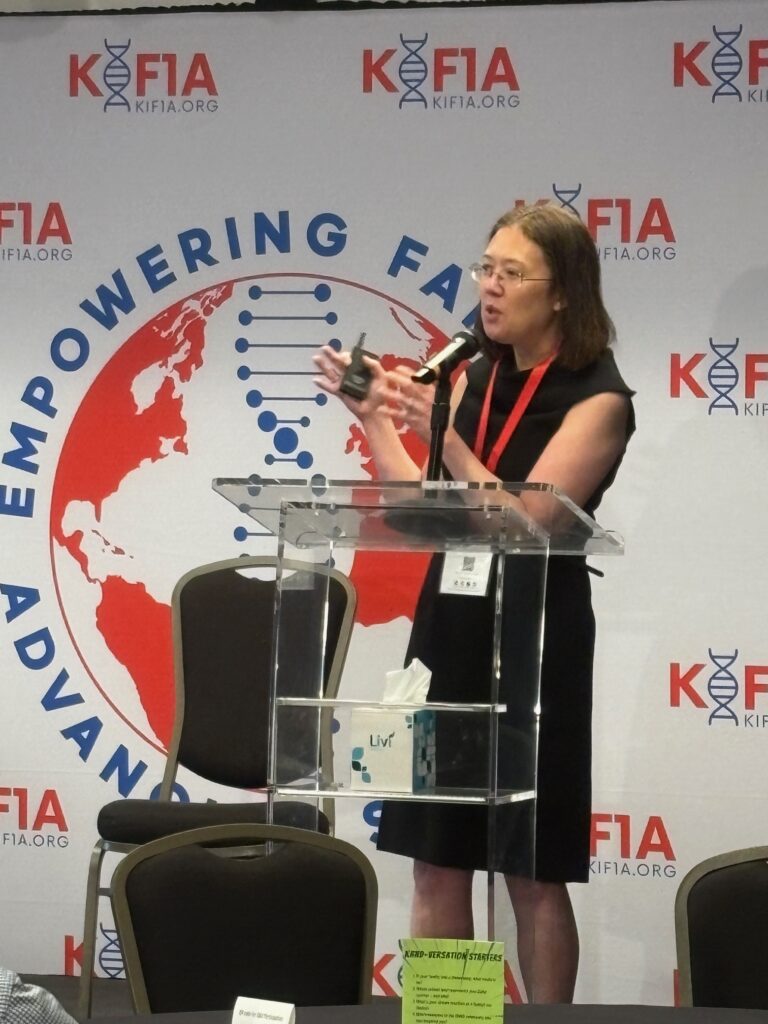
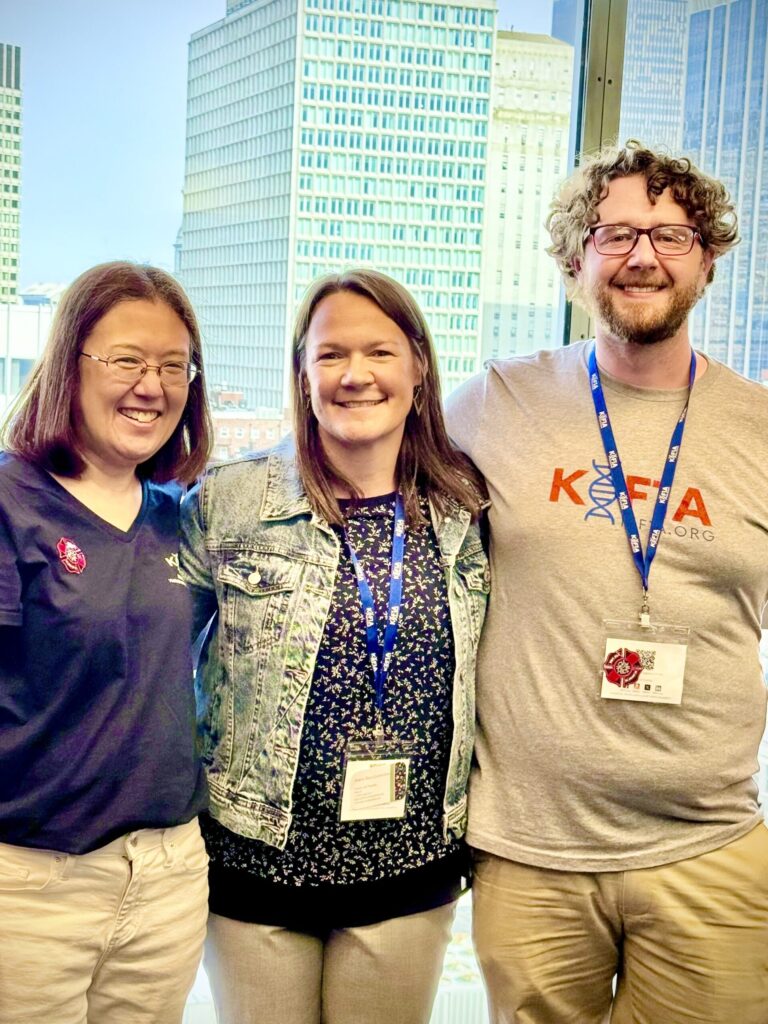
What are the ASCEND and KOALA Studies?
The ASCEND study is an online, survey-based research study that plays a vital role in deepening our understanding of KIF1A Associated Neurological Disorder (KAND) and accelerating the development of treatments. Through a series of carefully crafted questions and interviews, the Chung Lab team gathers information to help shape and grow our understanding of how KIF1A mutations are represented in our patient community. The ASCEND study is longitudinal, meaning it ongoingly captures information over time, and is sent to our enrolled community members to be completed once every year. The ASCEND study is open to all individuals with a KIF1A genetic mutation, including those who live outside of the United States and/or have a KIF1A mutation categorized as a Variant of Unknown Significance (VUS). We help to resolve variants of uncertain significance by genetically assessing parents if they are willing to provide a saliva sample for DNA.
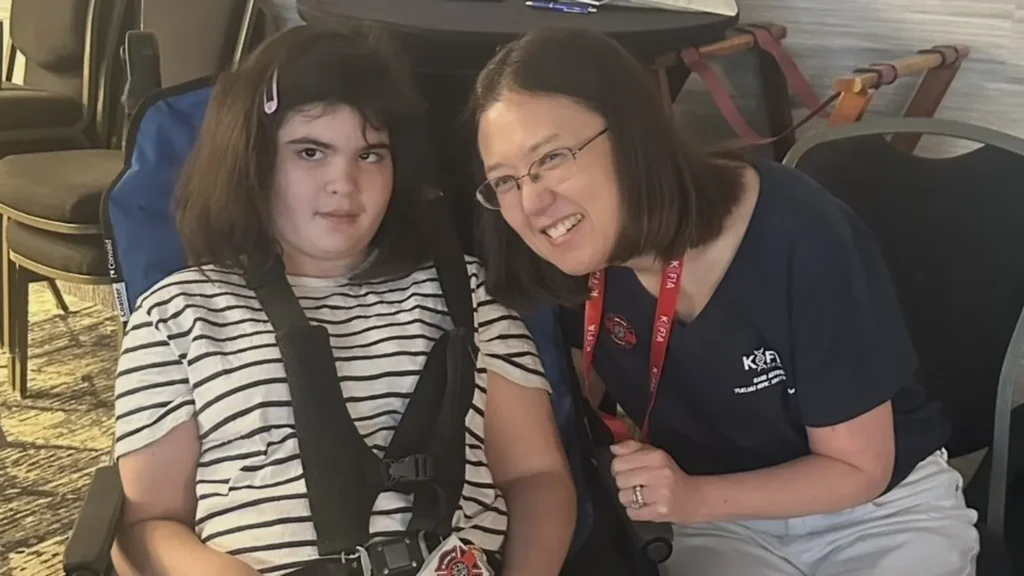
The KOALA Study is an in-person opportunity for eligible patients and families to advance KAND research, and get us closer to treatment, by participating in clinical assessments at Boston Children’s Hospital in Boston, Massachusetts. The KOALA Study is led by Principal Investigator, Dr. Wendy Chung, and a team of specialists who will perform standardized assessments with KAND patients to understand how KAND symptoms develop and change over time. The study involves various clinical assessments during a two-day visit at Boston Children’s Hospital in Boston. The assessments investigate multiple dimensions of KAND, including motor function/movement of the body, cognition/thinking, electrical brain waves, and eyes/vision.
Together, the ASCEND and KOALA studies have transformed our understanding of KAND and KIF1A mutations, both of which depend upon the continued participation of our KIF1A community members. The ASCEND and KOALA studies are open for enrollment, and now is the time to make an impact. The most critical part of rapidly discovering treatment for KAND patients is community participation. Without our community, nothing is possible. With our community, the sky is the limit.
Chung Lab KIF1A Research Studies By the Numbers
Together, we’ve made an impact, connecting with over 600 individuals with KIF1A mutations. This number continues to grow as more patients are identified and diagnosed with KAND, made possible by the trust and collaboration between KIF1A.ORG and the Chung Lab. See below for a snapshot of our collaborative impact:
- 363 Patients enrolled in ASCEND study
- 98 Patients who have participated in KOALA study
- 41 Countries represented in Chung Lab research studies
- 10 Scientific publications resulting from Chung Lab KIF1A research studies
- 6 Newly discovered KAND disease areas of interest
- 3 Group KOALA assessment initiatives held at biennial KAND Family & Scientific Engagement Conferences.
“Dr. Chung is a fearless leader and clinical champion for our KIF1A community. Through our previous conferences, online data collection, and KOALA study visits, she has provided opportunities for KAND families to participate in research including providing blood samples for genetic assessments, biomarkers and iPSCs, participating in evaluations by neurologists, ophthalmologists, psychologists, and physical therapists, and collecting EEG and MRI data. The work she does goes far beyond the lab or clinic, and impacts KAND patients, families, and advocates in so many meaningful ways. She has guided us since we established KIF1A.ORG, supporting individuals with KAND and their families, and facilitating and supporting research to better understand this disease and develop new treatments. Because of her, we are.”
Dr. Dominique Lessard – Executive Director, KIF1A.ORG
Looking Ahead to What’s Next
As we take a moment to reflect on the eight-year organization lifespan of KIF1A.ORG, something stands out clearly: Dr. Chung and her team have been walking beside us every step of the way since, literally, since day one. From our first meetings, appointments, conferences, publications, and more, our endeavors have thrived because of the relationship between our community and the Chung Lab. And while we’ve had a phenomenal eight years together, it’s what’s coming up next that is even more exciting.
“Understanding how people with KAND change over time helps us better predict what challenges lie ahead to avoid challenges and support people by adapting to those changes in their bodies. The information will also provide important data for each person for comparison if/when they start a treatment to tell if the treatment is having an effect. Because each person is unique (by mutation, age, community resources), we need as many people to participate as possible to make progress faster.“
Dr. Wendy Chung – Chief, Department of Pediatrics, Boston Children’s Hospital
Last year, we shared the news that Boston Children’s Hospital will launch a KIF1A NextGen Clinic in 2026, which will consist of a specialized group of providers within BCH designed to provide evidence-based and patient-centered care, tailored specifically to the needs of patients with KIF1A mutations. We are honored to be a part of this groundbreaking style of clinical care at one of the top pediatric hospitals in the world, leading in specialized care, research, and innovation.
2026 is just the beginning to a new era of KIF1A discovery and patient-centered treatment and who knows how far we will go? Only time will tell but, with clinicians, stakeholders, and advocates like the Chung Lab on our side, we won’t stop until we get there.
Relentlessly,
Dominique Lessard, PhD
Executive Director, KIF1A.ORG